Pages

Showing posts with label Aircraft. Show all posts

Wednesday, November 19, 2025

Wip Wednesday- Israel Aircraft Industries Nesher

Israel Aircraft Industries Nesher

I picked up the PM models IAI Nesher while I was in the Uk. The kit went together well Although it does have a very basic cockpit and the pilot had a lot of flash. I had it together in one evening, filled and sanded. Be a while before I get paint on it I suspect! It came with some lovely transfers and a great paint guide. 


Monday, September 22, 2025

Mustang P-51D “cookie”

 Completed another Mustang P-51D, built out of the box. Added Airfix pilot. I used AK real colour aluminum and steel  mix, panel lined, hand painted invasion stripes, then decals. I nice simple Revell kit. 


Sunday, September 21, 2025

Syrian MiG 17

 Another Syrian aircraft off the desk. The MIG 17 is marked with pre 1962 Roundels, painted with AK interactive Real Colour aluminum and gun metal. 


Cheers
Matt

Monday, September 15, 2025

Katanga Airforce Fouga Magister KAT 92


 Katanga Airforce Fouga Magister KAT 92

Completed the Heller 1/72 kit, painted with AK real colours and added aftermarket MAV decals for the Katangan markings. Quite happy with the results 

KATANGAN  92 Fouga Magister 

Without a doubt, the most infamous of the Katangan Fouga Magisters, KAT 92 seen the most service and caused the most controversy. Kat 92 operated from September 14 to 19, 1961, against UN forces. Damaged by ground fire on the 18th but grounded while peace talks commenced and then came into effect on the 20th. 

On the 3rd December 1961 it was damaged during an air attack, Indian UN Canberra bombers permanently grounded it at Kolwezi. Damaged, it was evacuated by rail on December 5, 1961, to Kisenge where it awaited replacement parts.

Thanks to this single training aircraft, based in Kolwezi, the Katangese "hunt" caused panic among the United Nations. The KAT 92 carried out rapid overflights of UN positions, dropping a few 50kg improvised bombs here and there. These interventions boosted the morale of the Katangese Gendarmerie and mercenary troops and sowed consternation among the ranks of the ONUC troops. The Fouga were an excellent means of psychological warfare against the ONUC soldiers and forced them to deploy air support. This Fouga also played a vital role in the attack on UN Kamina Airbase on the 15th, 16th, 17th and 18th of September destroying one DC4 on the ground and killing two UN pilots. Then the strafing and bombing of the Irish at Jadotville between the 13th and 17th. During at ground attack on the Kamina Airbase on the 18th it received damage. 

José Magain “the lone Prowler”
The pilot of the Fouga 92 was the Belgian José Magain who had flown with the Belgian Air Force. Joseph Delin the commander of Kolwezi airbase accompanied him as co-pilot on several missions including the staffing of Jadotville But when the journalists and photographers showed up in Kolwezi, José Magain disappeared… because no one could know that he had piloted the Fouga Magister. In reality he should no longer have been in Katanga and should have returned to Belgium on August 28, 1961, just like the other members of Avikat expelled by the UN (Operation “Rumpunch 27th August - October 1961”).
 
Armament for KAT 92, originally armed with 7.50 mm guns and ammunition, it was re-chambered for 7.62 caliber as ammunition was readily available. for bombing ground attack missions required manufacture of 50 kg bombs from mortar rounds and a primitive dropping and aiming system organized with the means at hand. The Fouga KAT 92 flew about 50 missions, claiming a UN DC-6, a DC-4, a DC-3, a dozen trucks, strafing the positions Jadotville, and a UN radio installations was destroyed at Kamina. The end of each of these missions was punctuated by a message to the control tower manned by the UN: "See you soon, gentlemen; I will be happy to come and see you again!" 


Saturday, September 6, 2025

Fouga Magister CM 170 - AVIKAT Katanga Airforce


Katanga Airforce Fouga Cm-170 Magister


The Fouga Cm-170 Magister is a first generation two seater jet trainer. Its distinctive V-shaped tail makes it easily recognisable to most aviation lovers. 
While primarily operated as a trainer aircraft, the Magister was also  used in combat as a close air support platform by 22 air forces. It saw action during the Six-Day War, the Salvadoran Civil War, the Western Sahara War, and the Congo Crisis. The Magister was also chosen by many aerobatics display teams, including the Patrouille de France, the Belgian Red Devils, Brazils Smoke Squadron, Austrian Silver Birds, the Luftwaffe flying school FlugzeugFuhrerSchule and the Irish Silver Swallows. The Fouga Magister was nicknamed "the whistling turtle" by the Belgian Air Force and the “whistling Rooster” by the Finns due to the motor whistling while in idle. 

The aircraft could be equipped with two 7.5 mm or 7.62 mm nose machine guns and had two hard points for bombs or missiles. 

The Fouga Magister in AVIKAT service 

In 1960, after the independence of Congo, the province of Katanga separated and became an independent republic. The President of Katanga, Moïse Tshombé, ordered 9 planes from Potez Air Fouga. Only three aircraft were delivered to Katanga at Luano (Elisabethville airfield). 
On February 15, 1961, the arrival of the three Katangese Fouga was announced by the "Daily Mail" of February 6, 61. 

The six Fouga Cm-170 Magisters that were still to be delivered to the Katangese government were in Pointe Noire (Congo Brazaville) in October 1961. But following the UN embargo, the ship brought them back to Antwerp where they were taken care of by customs. These were later sold to the Irish Airforce. 

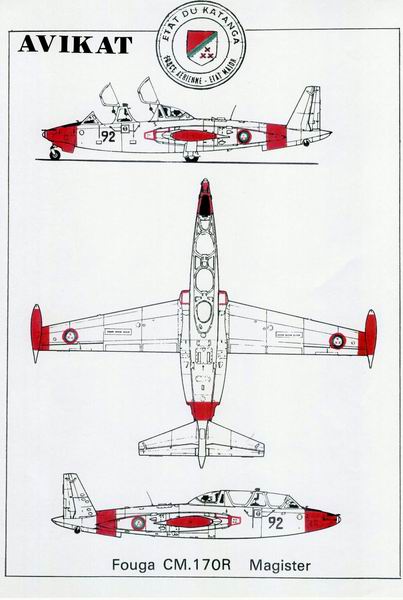
AVIKAT Markings 


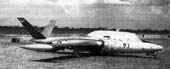
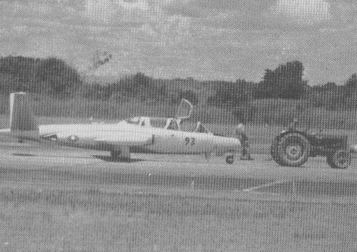
Katangan Fouga KAT 91. 

It crashed on June 23, 1961, during a maneuver over the old Eville runway. 
Very few photographic documents exist of it.
 

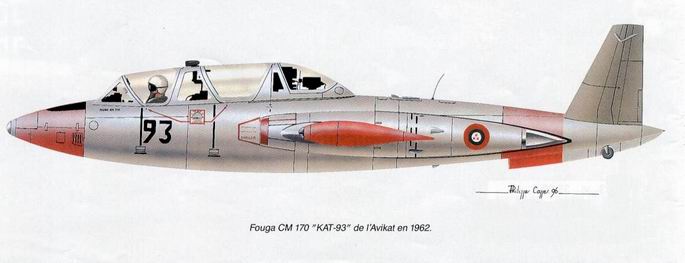
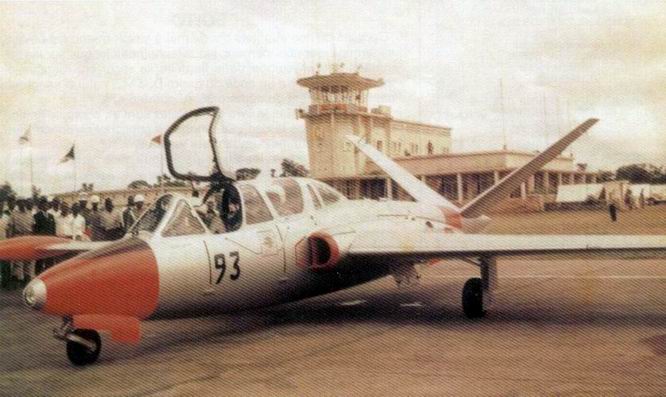
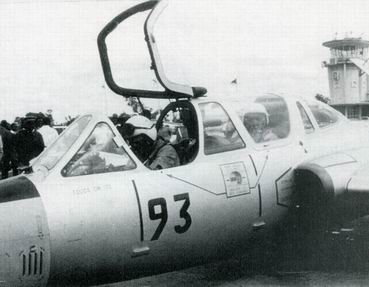
Katangan Fouga KAT 93

Its engine was being repaired when the UN launched Operation "Rhum Punch" on August 28, 1961, which aimed to expel foreign personnel from the Gendarmerie and the Avikat. KAT 93 flew a few missions but was seized by the UN at the end of August 1961. 
The most common depicted AVIKAT Fouga

KAT 93 in front of the Luano control tower.

KAT 93 on the tarmac at Luano. 
President Moïse Tshombe sits in the passenger seat
  
  
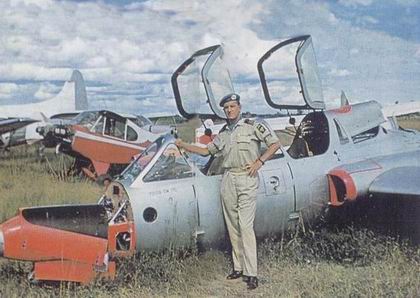
Standing next to KAT 93 the Swedish Air Force Colonel Sven Lampell, head of ONUC air operations and head of the UN fighter wing which included the "F22" Saab J-29 squadron, the Iranian Sabre jet squadron and the Ethiopian Sabre jet squadron. 

Katangan Fouga KAT 92

Markings for AVIKAT aircraft 

Without a doubt, the most infamous of the Katangan Fouga Magisters, KAT 92 seen the most service and caused the most controversy. Kat 92 operated from September 14 to 19, 1961, against UN forces. Damaged by ground fire on the 18th but grounded while peace talks commenced and then came into effect on the 20th. 

On the 3rd December 1961 it was damaged during an air attack, Indian UN Canberra bombers permanently grounded it at Kolwezi. Damaged, it was evacuated by rail on December 5, 1961, to Kisenge where it awaited replacement parts.

Thanks to this single training aircraft, based in Kolwezi, the Katangese "hunt" caused panic among the United Nations. The KAT 92 carried out rapid overflights of UN positions, dropping a few 50kg improvised bombs here and there. These interventions boosted the morale of the Katangese Gendarmerie and mercenary troops and sowed consternation among the ranks of the ONUC troops. The Fouga were an excellent means of psychological warfare against the ONUC soldiers and forced them to deploy air support. This Fouga also played a vital role in the attack on UN Kamina Airbase on the 15th, 16th, 17th and 18th of September destroying one DC4 on the ground and killing two UN pilots. Then the strafing and bombing of the Irish at Jadotville between the 13th and 17th. During at ground attack on the Kamina Airbase on the 18th it received damage. 

José Magain “the lone Prowler”
The pilot of the Fouga 92 was the Belgian José Magain who had flown with the Belgian Air Force. Joseph Delin the commander of Kolwezi airbase accompanied him as co-pilot on several missions including the staffing of Jadotville But when the journalists and photographers showed up in Kolwezi, José Magain disappeared… because no one could know that he had piloted the Fouga Magister. In reality he should no longer have been in Katanga and should have returned to Belgium on August 28, 1961, just like the other members of Avikat expelled by the UN (Operation “Rumpunch 27th August - October 1961”).
 
Armament for KAT 92, originally armed with 7.50 mm guns and ammunition, it was re-chambered for 7.62 caliber as ammunition was readily available. for bombing ground attack missions required manufacture of 50 kg bombs from mortar rounds and a primitive dropping and aiming system organized with the means at hand. The Fouga KAT 92 flew about 50 missions, claiming a UN DC-6, a DC-4, a DC-3, a dozen trucks, strafing the positions Jadotville, and a UN radio installations was destroyed at Kamina. The end of each of these missions was punctuated by a message to the control tower manned by the UN: "See you soon, gentlemen; I will be happy to come and see you again!" 

“The Ghost Sqaudron” a dummy aircraft on Kolwezi runway

 Hammarksjöld “affair”

.  

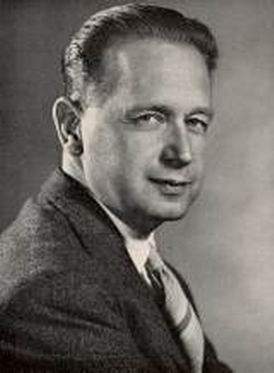
The event that has attracted the most attention regarding KAT 92 is the crash of Dag Hammarksjöld's DC-6 on September 17, 1961. Dag Hammarksjöld was the Secretary-General of the United Nations and was dispatched to the Congo to try to resolve the crisis. 
On the evening of September 17, his plane took off from Leopoldville for N'Dola. He was going there with the aim of meeting Moïse Tshombé...… The DC-6, "Albertina", never landed in N'Dola and crashed around midnight on a hill near N'Dola. Initially, the Fouga Magister KAT 92 was accused of having shot down the plane of the Secretary General of the United Nations, later it is thought a De Havilland Dove that did have night flying ability dropped mortar bombs onto the aircraft. 

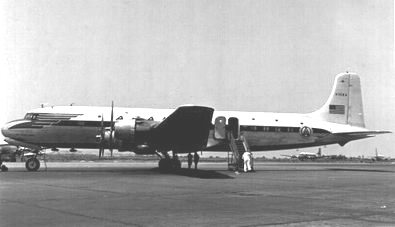
DC-6 “Albertina” registered SE-BDY which transported UN Secretary General Dag Hammarksjöld on September 17, 1961.


The international commission of inquiry sent to the scene by the UN to analyze the causes of the crash concluded that the reasons were certainly accidental. This same international commission from Rhodesia went to Kolwezi on October 20, 1961 to monitor the activity of the Fouga KAT 92 on the day of Mr. Hammarksjöld's death. On site, Major DELIN proved to them that the aircraft's autonomy was insufficient to reach N'Dola and, what's more, the Kolwezi airfield was not equipped for night flights. This exonerated (officially), at the same time, the Belgian pilot of the Fouga, Joseph Delin... (unofficially) we have since known that it was José MAGAIN who was the jet's assigned pilot! 

Cheers
Matt

Tuesday, August 19, 2025

Royal Moroccan Air Force - 1956 -1980

Royal Moroccan Air Force  - 1956 -1973


Summer is almost done and I finally get a few weeks off to complete models and do some airbrushing after one of the busiest Wargame holiday and b&b breakfast holidays .

I often do some resorting this time of year and come across partly complete projects in boxes. One of these was a F5A that I commenced earlier in the year during mad March, I was waiting on transfers to complete the model for my Royal Moroccan Air Force collection, these arrived this week.

The Moroccan Air Force was formed in 1956, its first aircraft were six ex French Morane-Saulniers MS 500 and three Max Holste MH1521 Broussard transport aircraft. In 1961, the Royal Morrocan Airforce gained the Royal title prefix. Its first purchases were twelve Mikoyan-Gurevich MiG-17 fighters, two Mikoyan-Gurevich MiG-15UTI trainers and two Ilyushin Il-28 bombers from the Soviet Union. Eight Fouga Magister training aircraft were also purchased from France. In 1962, 10 Douglas C-47 Skytrain and six Fairchild C-119G transport aircraft were purchased along with 12 North American T-6 Texans were used for pilot training, eight T-6Gs and 56 SNJ-4s had been delivered by France, but most of the airframes were in a very poor condition, and written off soon after their delivery for spare parts. 15 Harvard MkIV were also delivered in 1962 from ex Canadian stock. Several DO-28 SkyServant reconnaissance and light transport/liaison aircraft were also purchased from Germany

A political rift with the Soviet Union during the Sand War with Angola and this pushed Morocco to seek a new ally in the United States.  latter six Northrop F-5 combat aircraft (4 single-seat F-5A and 2 two-seat F-5B) and another 20 F-5A and four F-5B in 1966. 

At that time, the helicopter fleet was composed of six Aerospatiale Alouette IIs and four Bell 47s.
Starting in 1968, Morocco acquired 60 Bell AB205, 25 Bell AB206, two Bell AB212, and nine Bell CH-47C helicopters from Italy. Deliveries lasted until 1977.

The next modernization of the Moroccan Air Force took place just before the Sahara conflict. The first 25 Mirage F1CH fighters were purchased in 1975, together with 38 Aerospatiale Puma helicopters. Six C-130Hs were bought in 1973, and deliveries started in 1974. Modernization of Northrop F-5 Freedom Fighter with improved technology and the purchase of 24 Alpha Jet E would later be undertaken by the RMAF. 16 F-5Es and 4 F-5Fs were acquired in October 1979.  Morocco purchased four single-seat Northrop F-5s and two two-seat bombers from the United States. This deal was followed by another to purchase 20 F-5 attack aircraft and four F-5 bombers. Together with the F-5E/Fs, the FRA decided to buy a total of 24 OV-10As from the United States Marine Corps. However, only the first six aircraft were delivered. They were mostly used in a maritime patrol role and for reconnaissance due to their ineffic iency in combat.A total of 30 Mirage F1CHs were received in December 1979. Additionally, 20 Mirage F1EHs (including six equipped with in-flight refuelling probes) were delivered between December 1979 and July 1982. in 1982, a Boeing 707-138B was fitted with Beech hose units at the wingtips for refueling. Two Lockheed KC-130Hs were also delivered, and all of the F-5Es were modified with aerial refueling probes. four refueling aircraft were purchased, including three B-707s and one C-130

Sand War


The RMAF participated in the Moroccan-Algerian border conflict in 1963 known as Sand War. Its Fairchild C-119s and Douglas C-47swere used to resupply troops, North American T-6s for reconnaissance, and Morane-Saulnier Alcyons for ground attack. MiG-17s were only used sporadically, mostly due to their short range.

Yom Kippur War


I cannot confirm completely that the air force fought in any combat sorties, however reports of fourteen Mig 17 and twelve Moroccan Air Force Northrop F-5A joined the Egyptian 69 Squadron at Tanta on 19 October 1973. In January 1974 two F-5As armed with AIM-9Bs and 20mm cannons intercepted a pair of Israeli Air Force Mirage IIICJs on a reconnaissance mission. The Israelis turned away once the F-5As were detected, dragging both RMAF fighters behind them. Concerned about a possible ambush by Israeli F-4E Phantom IIs, the Egyptian Air Force ground control ordered both Moroccan fighters to return, replacing them with two EAF MiG-21MFs. The air force continued to fly missions over the Nile delta after the ceasefire.


Western Sahara War


At the beginning of the Western Sahara War, Fouga Magisters (based at Laayoune) and North American T-6 Texans (based at Dakhla) were used for ground support. Later on, the F-5s went into action, to strike POLISARIO targets.

In 1980, construction of the Sahara defensive walls began, consisting of several types of obstacles for infantry and armoured vehicles, such as mine fields and barbed wire. Radars and other electronic sensors were used to detect infiltration attempts, all backed by Quick Intervention Units (Détachements d'Intervention Rapide) able to move to and quickly reinforce attacked outposts along the wall.  It was also decided to use Aérospatiale SA 342 Gazelle helicopters with HOT missiles to engage the POLISARIO armoured vehicles and technicals from outside the range of light anti-aircraft guns. Apart from the ground radars of the Wall, two C-130 Hercules equipped with SLARs were also used for the detection of enemy units. However, the first portion of the wall, completed in 1982, protected only the area considered as “useful” for Morocco's political and economic interests, that is, the capital Laayoune, the religious center Smara, and the phosphate fields of Bou Craa.

After the loss of nine F-5As during combat operations against the POLISARIO, 16 F-5Es and 4 F-5Fs were acquired in October 1979. The main problem that faced Moroccan fighter-bombers in Western Sahara was their insufficient range over the vast battlefield of the Sahara desert.

In December 1977, the Royal Moroccan Air Force started receiving its first Mirage F1CHs. Even though the Mirage F1CH was designed as an interceptor, it was used almost exclusively for ground attack in the war against the POLISARIO. The last of a total of 30 Mirage F1CHs were received in December 1979. Additionally, 20 Mirage F1EHs (including six equipped with in-flight refuelling probes) were delivered between December 1979 and July 1982.

With the outbreak of the Sand War, the Soviet Union betrayed an ally it could have had—Morocco—by supporting Algeria, given its socialist approach. Instead of balancing its relations with both countries, Morocco shifted its focus to a new ally: the United States.


As for transport units, 10 of the famous Douglas C-47s, 18 Fairchild C-119Gs, and six C-130 Hercules were acquired . Due to the conflicts in the Sahara, Morocco saw a need for helicopters, and therefore purchased 24 Augusta-Bell AB205A helicopters. For training, the needs were covered by 60 T-6 ​​Texans. The subsequent development of the air force was through the acquisition of Mirage F1 attack aircraft. Given the importance of the air force and the difficult period it went through and its reliance on aviation, more pilots needed to be trained. Therefore, T-34 Mentor trainer aircraft were acquired, along with the purchase of Puma helicopters and an unspecified number of C-130s to replace their aging counterparts.
Morocco needed aircraft to monitor its long coastline, and after studying the matter, a deal was concluded with the United States to purchase six OV-10 Bronco reconnaissance and attack aircraft.

With the outbreak of hostilities between Morocco and the Polisario Front, Morocco needed light armor-piercing helicopters. This was accomplished by purchasing an unspecified number of Hughes 500MDs, equipped with TOW missiles, which destroyed several T-55/54 tanks and BMP armored vehicles.
To track enemy units, Morocco purchased C-130 aircraft equipped with the SLAR system to track enemy units. It also gifted the Shah of Iran two RF5 reconnaissance aircraft, followed by a significant deal for 20 new F-5 Tiger II aircraft.


Wednesday, August 6, 2025

Mig 15 UTI Midget -Wip Wednesday

 A quick hobby boss Mig15 UTI midget build over the weekend in between battlefield tours. A very basic kit and simple rapid build kit. I completed the build on Sunday. I am planning a stationary build that I can use for a special forces raid. Hoping for paint job on Thursday or Friday as I need to complete another Mig 21 in the same camo!


Cheers

Matt


MiG 17 PF WIP

  MiG 17 PF WIP

As the summer sales are on at the moment I have gone a little crazy and pickup a number of kits for my collection from early war ww2 through to current. With that I continue my MIG obsession at the moment, another MIG15 and two MiG 17s purchased as commenced. Simple Plastyk builds, one will join my Egyptians and Iraqis.


Monday, June 16, 2025

SU -15 TM PM models

 Flagon SU-15TM

Last year in england I picked up the PM model SU15TM at Newark air museum. This is another MAYDAY build.


What can I say, one of the most dreadful kits I have ever built, the fuselage was bent, the fuselage needed so much filler I should of just scratch built one, one wing was offset and the canopy looks like a Mig 15 canopy and was so thick and was such a poor fit it is almost not worth placing on the kit. I built it anyway and three weeks ago before holidays I painted it. I added the decals on it, but still not my favourite at all. I elected to add 2 of the  K-8 missiles, I added KP models  S-5 rockers for ground attack role. My suggestion steer clear of this kit.

Cheers
Matt

ME 163 Komet

 ME 163 Komet 

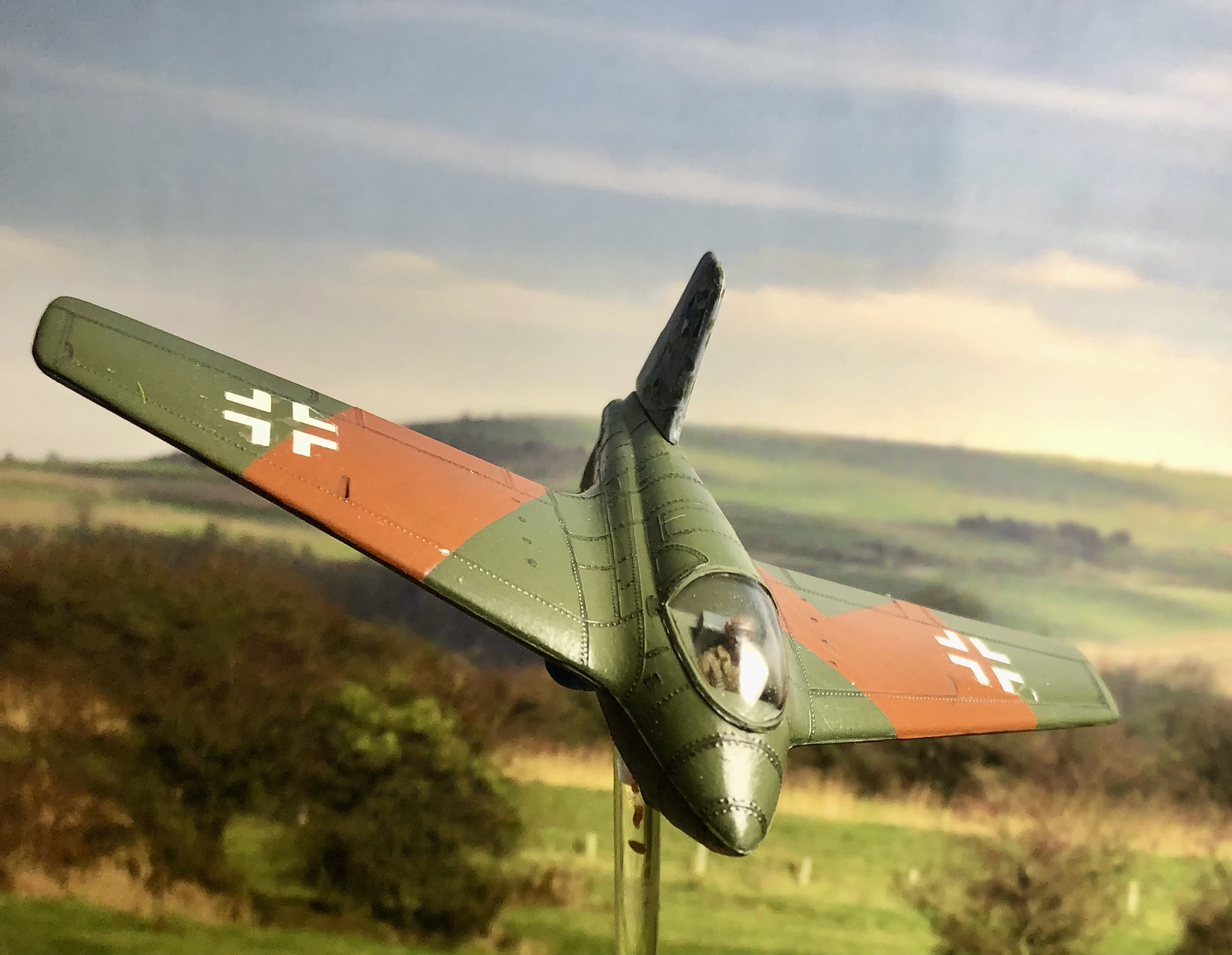
Another kit completed from my MAYDAY build, it has been finished for three weeks or so, but I mislaid the canopy, which I found yesterday…… a simple build, the paint job is part airbrush part hand painted as I had masking tape tear so a sand back then brush job to complete, added decals from the kit, pilot is a supplied one. Not much use for wargaming but I knew I had to have one. When I worked at the Australian war memorial as a guide I often would take my guided group past the one in the memorial reminding people that this little jet was really a glider that was often a one way ticket. 


Cheers
Matt

Saturday, June 14, 2025

370th Fighter Group P38 part 2

 370th Fighter Group P38 part 2

Finally got some time to complete this model, the P-38J from the 401st reconnaissance squadron of the  370th fighter group USAAF.  I have always wanted to build one of these for my European theatre ground air support as this unit was the close support for Pattons 3rd Armys breakout through Pays de Loire in August 1944. The droop snoot nosed aircraft was used coordination for targeting and low level rockets and bombing by the rest of the group, targeting the German support elememts and retreating convoys to the north and east into the Falaise pocket. 


As Wargamers we like to think that air support was easily available, with ground to air contact regularly. Pattons 3rd army was the first time that units at the front had direct radio liaison between the ground and the target liaison aircraft during the breakout. US aircraft were available every 8 mins to be targeted on the Germans units directed by these aircraft in constant contact with the lead elements of Pattons Armoured units. The P38s were flying out of Cardonville in Normandy so were over targets in the Mayenne region in around 5 mins as they chased the German 7th army east towards Paris then the border. The unit was also the first to drop Napalm incendiary bombs in Normandy on the 17th of July on a German fuel depot at Coutances west of St Lo. 

My kit is the superb Dragon model, only complaint no pilot….. so a Revell one was used, markings are for the 401st squadron of the 370th Fighter Group, fuselage code 7F. 


Cheers

Matt

Friday, May 16, 2025

Isreali Dassault Super Mystère

Israeli Dassault Super Mystère

A very old Airfix Dassault Super Mystere B2 kit, a very clean build but the decals were not in great shape so aftermarket were added. It will serve in my Arab Isreali games nicely. Really happy with this one as part of my May Day aircraft builds. 


Cheers
Matt

Thursday, May 15, 2025

A-10 Thunderbolt Hog

 A-10 Thunderbolt Hog 

An Academy A-10 Thunderbolt kit I have had laying around for more than ten years built but not painted pile of shame. This month I have been airbrushing madly to complete a lot of built kits, this chap made it to the front of the line last week. 
Reasonably happy with the results, marked up for Europe. I have another kit unbuilt, I will build that for Iraq in the future. 


Cheers
Matt

Friday, May 9, 2025

Bloch 152 l’Armee de l’Air de Vichy “Potent Pedro”

 Vichy Bloch 152

As a palette cleanser this week I completed a Bloch 152 for the Vichy airforce, I already have two Bloch 152 in the collection so I thought I needed to do something different, and here it is. 


Cheers
Matt

Thursday, May 8, 2025

Luftwaffe F4 phantom

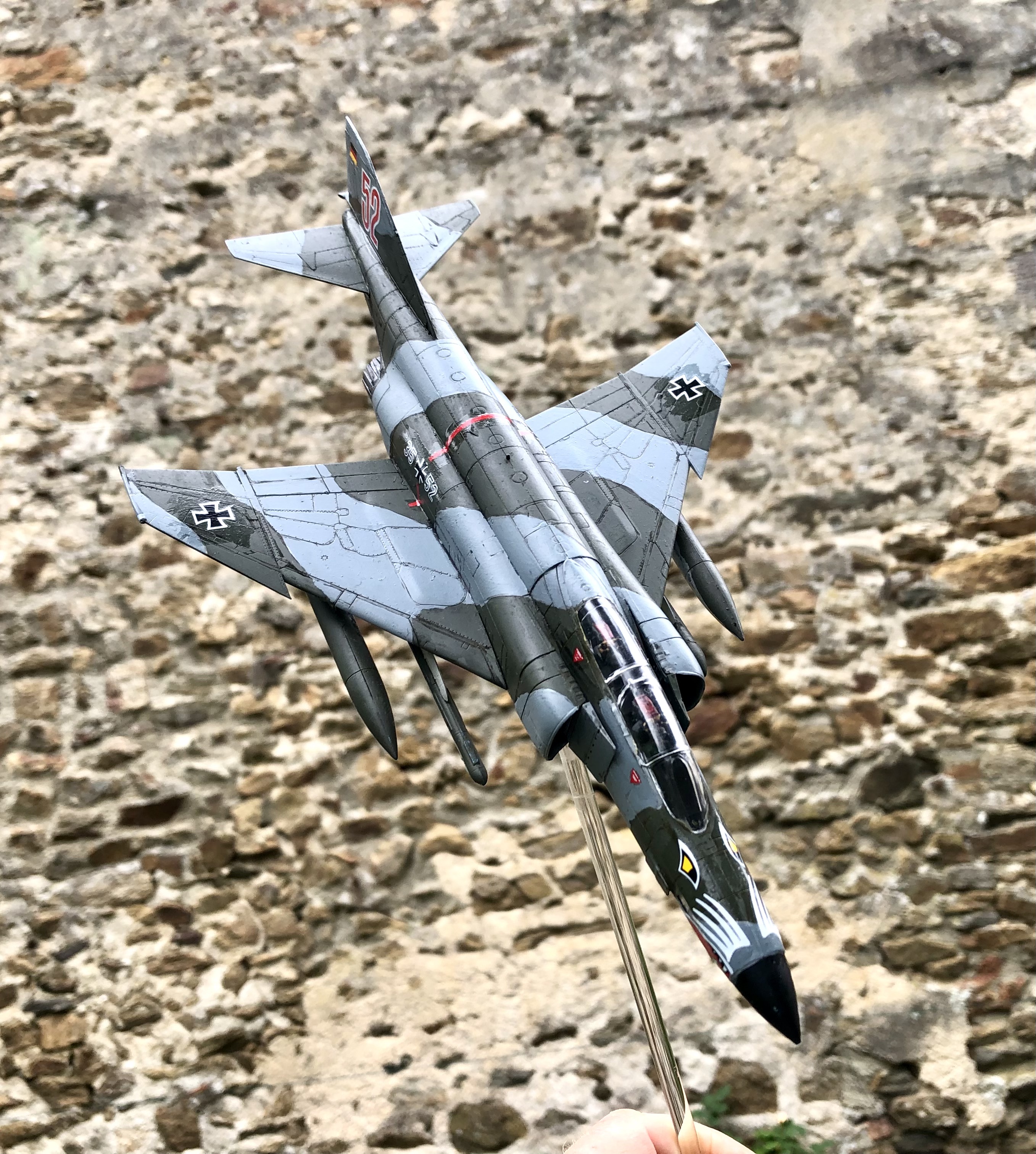
 Luftwaffe F 4 phantom 

This aircraft has been almost complete pile for 10 years at least, the interior and base coat was painted, but no detailing done, panel lines, weathering  decals or pilot.

 Last month I unpacked boxes of kits from storage to complete some for the 30 day kit build. In these boxes were a number of aircraft in various stages of completion, mostly built but no paint, or pilots. So my goal this month is to finish off as many as I can before moving onto armour! 

Now I also have 3d files for pilots, so I have started printing loads of ww2, helicopter and jet pilots and looking for or purchasing decals to complete a number of builds that had stalled along with matching canopies (which is ok for some but difficult for others….). So expect a lot of aircraft over the coming month as I paint pilots, airbrush built kits and add decals. 

Really happy with my results although I think I would like to build it again and be more careful within my fit and finish. Overall really good to have it completed. 


Cheers
Matt