Pages

Showing posts with label Congo. Show all posts

Tuesday, July 21, 2026

United Nations vehicles

 I picked these two matchbox vehicles up recently and the last two weeks I have been undercoating vehicles and figures. I am back painting Congo units and some insurgents.  I thought I should paint these vehicles with my current batch of technicals and vehicles that are on the workbench. The decals were purchased some time ago for UN vehicles from . Quite Happy with the job


Cheers
Matt

Friday, June 26, 2026

Insurgent Technicals

 Technicals 


You can never have enough technicals for insurgency type games. Some modern technicals for more recent conflicts, I picked up these two prints from eBay with some Elhiem figures, the prints were a bit rough being PLA but with a bit of work look quite serviceable for my current Middle East insurgent collection. I need to add pigments next week when I complete the other four vehicles. 


Cheers

Matt

Monday, January 12, 2026

The Leopard Battalion - 10th Commando in the Congo

 The Leopard Battalion -

 10 Commando in the Congo 


The iconic leopard "Kansimba" commandos of the Congo, led by Major Jean "Black Jack" Schramme. The design of the original 2nd pattern patch features a jumping leopard motif, superimposed onto an outlines of the Katangan state (red), Lake Tanganyika (blue), and the distinctive Katanga cross (locally called the "handa").


Tracing it's origins to "Leopard Group" in 1961 for service in during the Katanga crisis. It was originally formed up of white volunteers from South Africa and Rhodesia, but was augmented by a force of black Katangan Gendarmes as the unit withdrew to Angola in early 1963. Upon the outbreak of the Simba Rebellion in 1964, the unit was fully incorporated back into Armée Nationale Congolaise (ANC) as 10 Commando (Kansimba). The unit served throughout the war helping to liberate large swathes of the country from the ruthless rule of the lawless Simbas rebels.


Upon the outbreak of the Mercenary's Revolt in 1967, 10 Commando turned against General Mobutu's ANC in continued favor of Moise Tshombe. The unit scored some early successes under Schramme's renegade command, the unit was critically under-supplied. As ANC forces regrouped, 10 Commando was largely destroyed as a fighting force by the fall of 1967 by the elite ANC 2nd Parachute Brigade. A large number the surviving 10 Commando men of Lunda descent fled to Angola, where many would fight for the Portuguese against communist rebels. Schramme and the white volunteers largely departed for Europe permanently by 1968.

I plan to add a command unit of 5 figures and two sections of 8 figures to my collection armed with SLR and Mag 58 from Britannia 

Cheers
Matt

Tuesday, September 16, 2025

Terrängbil m/42 Armoured cars Part 1

Terrängbil m/42 ONUC

As part of the Congo build I am planning to build some equipment for my Swedes. In the stash I have a Terrängbil Gecko Heavy Industries model, I will paint it UN white along with a few jeeps, a VW ambulance, two trucks and a M8 Armoured car. 

Two terrängbil m/42 SKPF advancing upon Kaminaville, with two Swedish Pansarbil M8 during the Congo CrisIs


Monday, September 15, 2025

Katanga Airforce Fouga Magister KAT 92


 Katanga Airforce Fouga Magister KAT 92

Completed the Heller 1/72 kit, painted with AK real colours and added aftermarket MAV decals for the Katangan markings. Quite happy with the results 

KATANGAN  92 Fouga Magister 

Without a doubt, the most infamous of the Katangan Fouga Magisters, KAT 92 seen the most service and caused the most controversy. Kat 92 operated from September 14 to 19, 1961, against UN forces. Damaged by ground fire on the 18th but grounded while peace talks commenced and then came into effect on the 20th. 

On the 3rd December 1961 it was damaged during an air attack, Indian UN Canberra bombers permanently grounded it at Kolwezi. Damaged, it was evacuated by rail on December 5, 1961, to Kisenge where it awaited replacement parts.

Thanks to this single training aircraft, based in Kolwezi, the Katangese "hunt" caused panic among the United Nations. The KAT 92 carried out rapid overflights of UN positions, dropping a few 50kg improvised bombs here and there. These interventions boosted the morale of the Katangese Gendarmerie and mercenary troops and sowed consternation among the ranks of the ONUC troops. The Fouga were an excellent means of psychological warfare against the ONUC soldiers and forced them to deploy air support. This Fouga also played a vital role in the attack on UN Kamina Airbase on the 15th, 16th, 17th and 18th of September destroying one DC4 on the ground and killing two UN pilots. Then the strafing and bombing of the Irish at Jadotville between the 13th and 17th. During at ground attack on the Kamina Airbase on the 18th it received damage. 

José Magain “the lone Prowler”
The pilot of the Fouga 92 was the Belgian José Magain who had flown with the Belgian Air Force. Joseph Delin the commander of Kolwezi airbase accompanied him as co-pilot on several missions including the staffing of Jadotville But when the journalists and photographers showed up in Kolwezi, José Magain disappeared… because no one could know that he had piloted the Fouga Magister. In reality he should no longer have been in Katanga and should have returned to Belgium on August 28, 1961, just like the other members of Avikat expelled by the UN (Operation “Rumpunch 27th August - October 1961”).
 
Armament for KAT 92, originally armed with 7.50 mm guns and ammunition, it was re-chambered for 7.62 caliber as ammunition was readily available. for bombing ground attack missions required manufacture of 50 kg bombs from mortar rounds and a primitive dropping and aiming system organized with the means at hand. The Fouga KAT 92 flew about 50 missions, claiming a UN DC-6, a DC-4, a DC-3, a dozen trucks, strafing the positions Jadotville, and a UN radio installations was destroyed at Kamina. The end of each of these missions was punctuated by a message to the control tower manned by the UN: "See you soon, gentlemen; I will be happy to come and see you again!" 


Saturday, September 6, 2025

Fouga Magister CM 170 - AVIKAT Katanga Airforce


Katanga Airforce Fouga Cm-170 Magister


The Fouga Cm-170 Magister is a first generation two seater jet trainer. Its distinctive V-shaped tail makes it easily recognisable to most aviation lovers. 
While primarily operated as a trainer aircraft, the Magister was also  used in combat as a close air support platform by 22 air forces. It saw action during the Six-Day War, the Salvadoran Civil War, the Western Sahara War, and the Congo Crisis. The Magister was also chosen by many aerobatics display teams, including the Patrouille de France, the Belgian Red Devils, Brazils Smoke Squadron, Austrian Silver Birds, the Luftwaffe flying school FlugzeugFuhrerSchule and the Irish Silver Swallows. The Fouga Magister was nicknamed "the whistling turtle" by the Belgian Air Force and the “whistling Rooster” by the Finns due to the motor whistling while in idle. 

The aircraft could be equipped with two 7.5 mm or 7.62 mm nose machine guns and had two hard points for bombs or missiles. 

The Fouga Magister in AVIKAT service 

In 1960, after the independence of Congo, the province of Katanga separated and became an independent republic. The President of Katanga, Moïse Tshombé, ordered 9 planes from Potez Air Fouga. Only three aircraft were delivered to Katanga at Luano (Elisabethville airfield). 
On February 15, 1961, the arrival of the three Katangese Fouga was announced by the "Daily Mail" of February 6, 61. 

The six Fouga Cm-170 Magisters that were still to be delivered to the Katangese government were in Pointe Noire (Congo Brazaville) in October 1961. But following the UN embargo, the ship brought them back to Antwerp where they were taken care of by customs. These were later sold to the Irish Airforce. 

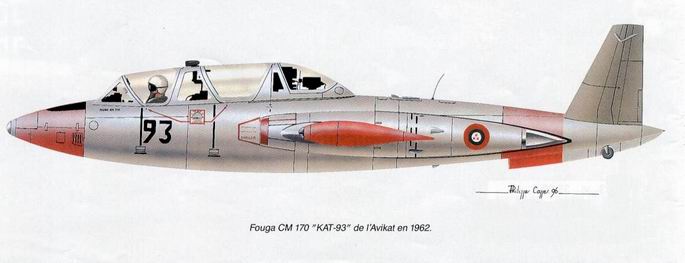
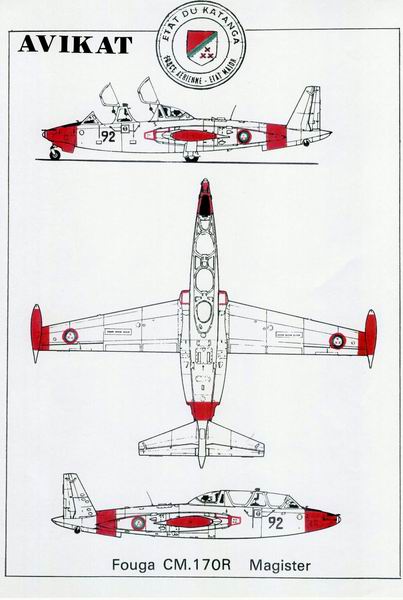
AVIKAT Markings 


Katangan Fouga KAT 91. 

It crashed on June 23, 1961, during a maneuver over the old Eville runway. 
Very few photographic documents exist of it.
 

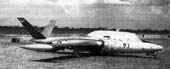
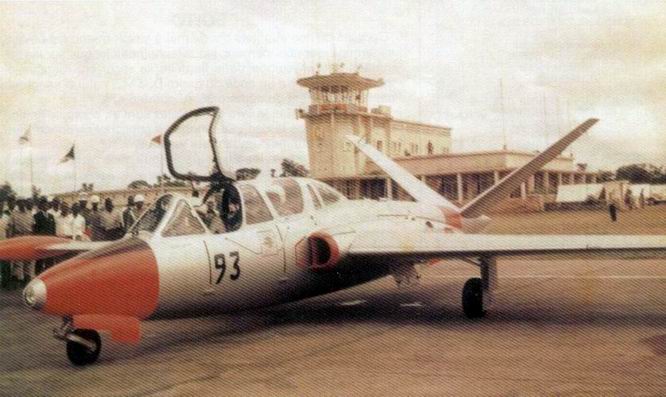
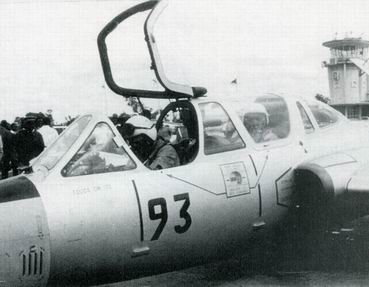
Katangan Fouga KAT 93

Its engine was being repaired when the UN launched Operation "Rhum Punch" on August 28, 1961, which aimed to expel foreign personnel from the Gendarmerie and the Avikat. KAT 93 flew a few missions but was seized by the UN at the end of August 1961. 
The most common depicted AVIKAT Fouga

KAT 93 in front of the Luano control tower.

KAT 93 on the tarmac at Luano. 
President Moïse Tshombe sits in the passenger seat
  
  
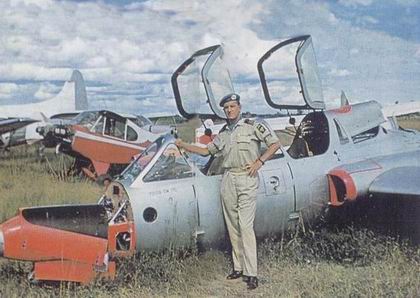
Standing next to KAT 93 the Swedish Air Force Colonel Sven Lampell, head of ONUC air operations and head of the UN fighter wing which included the "F22" Saab J-29 squadron, the Iranian Sabre jet squadron and the Ethiopian Sabre jet squadron. 

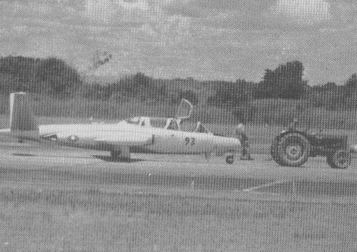
Katangan Fouga KAT 92

Markings for AVIKAT aircraft 

Without a doubt, the most infamous of the Katangan Fouga Magisters, KAT 92 seen the most service and caused the most controversy. Kat 92 operated from September 14 to 19, 1961, against UN forces. Damaged by ground fire on the 18th but grounded while peace talks commenced and then came into effect on the 20th. 

On the 3rd December 1961 it was damaged during an air attack, Indian UN Canberra bombers permanently grounded it at Kolwezi. Damaged, it was evacuated by rail on December 5, 1961, to Kisenge where it awaited replacement parts.

Thanks to this single training aircraft, based in Kolwezi, the Katangese "hunt" caused panic among the United Nations. The KAT 92 carried out rapid overflights of UN positions, dropping a few 50kg improvised bombs here and there. These interventions boosted the morale of the Katangese Gendarmerie and mercenary troops and sowed consternation among the ranks of the ONUC troops. The Fouga were an excellent means of psychological warfare against the ONUC soldiers and forced them to deploy air support. This Fouga also played a vital role in the attack on UN Kamina Airbase on the 15th, 16th, 17th and 18th of September destroying one DC4 on the ground and killing two UN pilots. Then the strafing and bombing of the Irish at Jadotville between the 13th and 17th. During at ground attack on the Kamina Airbase on the 18th it received damage. 

José Magain “the lone Prowler”
The pilot of the Fouga 92 was the Belgian José Magain who had flown with the Belgian Air Force. Joseph Delin the commander of Kolwezi airbase accompanied him as co-pilot on several missions including the staffing of Jadotville But when the journalists and photographers showed up in Kolwezi, José Magain disappeared… because no one could know that he had piloted the Fouga Magister. In reality he should no longer have been in Katanga and should have returned to Belgium on August 28, 1961, just like the other members of Avikat expelled by the UN (Operation “Rumpunch 27th August - October 1961”).
 
Armament for KAT 92, originally armed with 7.50 mm guns and ammunition, it was re-chambered for 7.62 caliber as ammunition was readily available. for bombing ground attack missions required manufacture of 50 kg bombs from mortar rounds and a primitive dropping and aiming system organized with the means at hand. The Fouga KAT 92 flew about 50 missions, claiming a UN DC-6, a DC-4, a DC-3, a dozen trucks, strafing the positions Jadotville, and a UN radio installations was destroyed at Kamina. The end of each of these missions was punctuated by a message to the control tower manned by the UN: "See you soon, gentlemen; I will be happy to come and see you again!" 

“The Ghost Sqaudron” a dummy aircraft on Kolwezi runway

 Hammarksjöld “affair”

.  

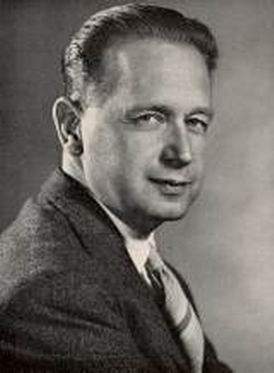
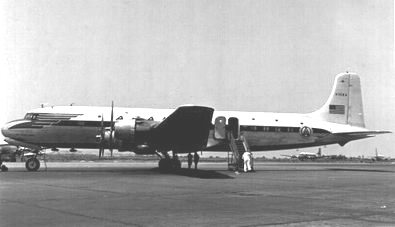
The event that has attracted the most attention regarding KAT 92 is the crash of Dag Hammarksjöld's DC-6 on September 17, 1961. Dag Hammarksjöld was the Secretary-General of the United Nations and was dispatched to the Congo to try to resolve the crisis. 
On the evening of September 17, his plane took off from Leopoldville for N'Dola. He was going there with the aim of meeting Moïse Tshombé...… The DC-6, "Albertina", never landed in N'Dola and crashed around midnight on a hill near N'Dola. Initially, the Fouga Magister KAT 92 was accused of having shot down the plane of the Secretary General of the United Nations, later it is thought a De Havilland Dove that did have night flying ability dropped mortar bombs onto the aircraft. 

DC-6 “Albertina” registered SE-BDY which transported UN Secretary General Dag Hammarksjöld on September 17, 1961.


The international commission of inquiry sent to the scene by the UN to analyze the causes of the crash concluded that the reasons were certainly accidental. This same international commission from Rhodesia went to Kolwezi on October 20, 1961 to monitor the activity of the Fouga KAT 92 on the day of Mr. Hammarksjöld's death. On site, Major DELIN proved to them that the aircraft's autonomy was insufficient to reach N'Dola and, what's more, the Kolwezi airfield was not equipped for night flights. This exonerated (officially), at the same time, the Belgian pilot of the Fouga, Joseph Delin... (unofficially) we have since known that it was José MAGAIN who was the jet's assigned pilot! 

Cheers
Matt

Monday, September 1, 2025

Congo Militia

 Congo Militia 

Completed a few Congo plastic militia from Caesar Miniatures. A simple paint job, base colors, wash and one highlight. Quite happy with them, I plan on adding some more metal ones so I can have a decent sized battalion of militia. 


Cheers
Matt

Wednesday, August 27, 2025

Wip Wednesday- African militia

 African Militia WIP

I watched Mister Bob about a week ago so it got me excited again to build some more bits for the Congo, so off upstairs to find my plastics stash and I found quite a few pieces suitable for militia to paint. Hopefully get them finished by the weekend, highlights to go.