A thorn in the side - Panzer-Brigade 107 at Market Garden
Formation of Panzer-Brigade 107 starts on 28.07.1944 from the remnants of the 25. Panzergrenadier-Division. This division had been virtually destroyed earlier that summer in the Minsk. Major Berndt-Joachim Freiherr von Maltzahn is assigned as commander with Hauptmann Spiegel as his adjutant.
Organisation
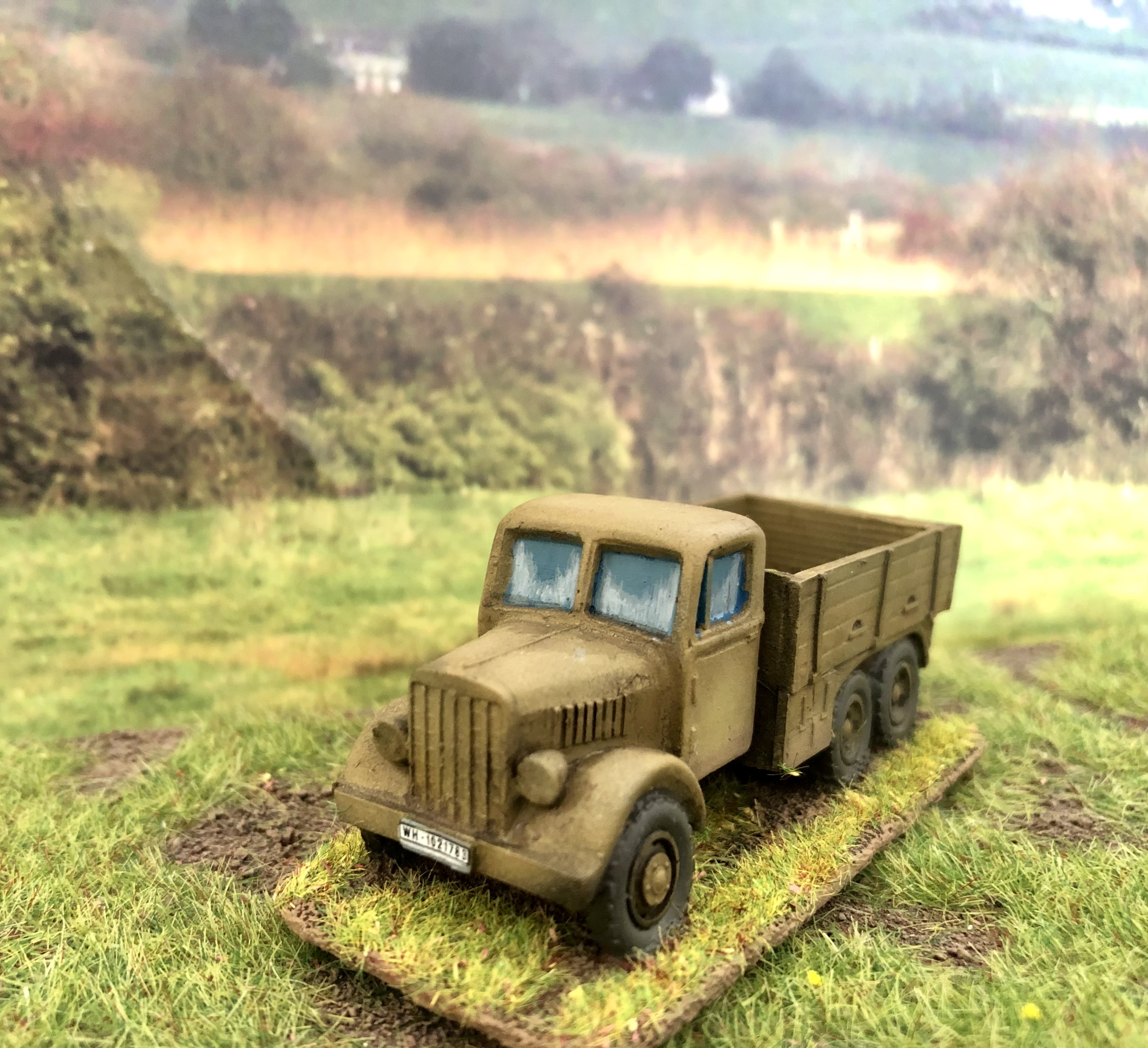
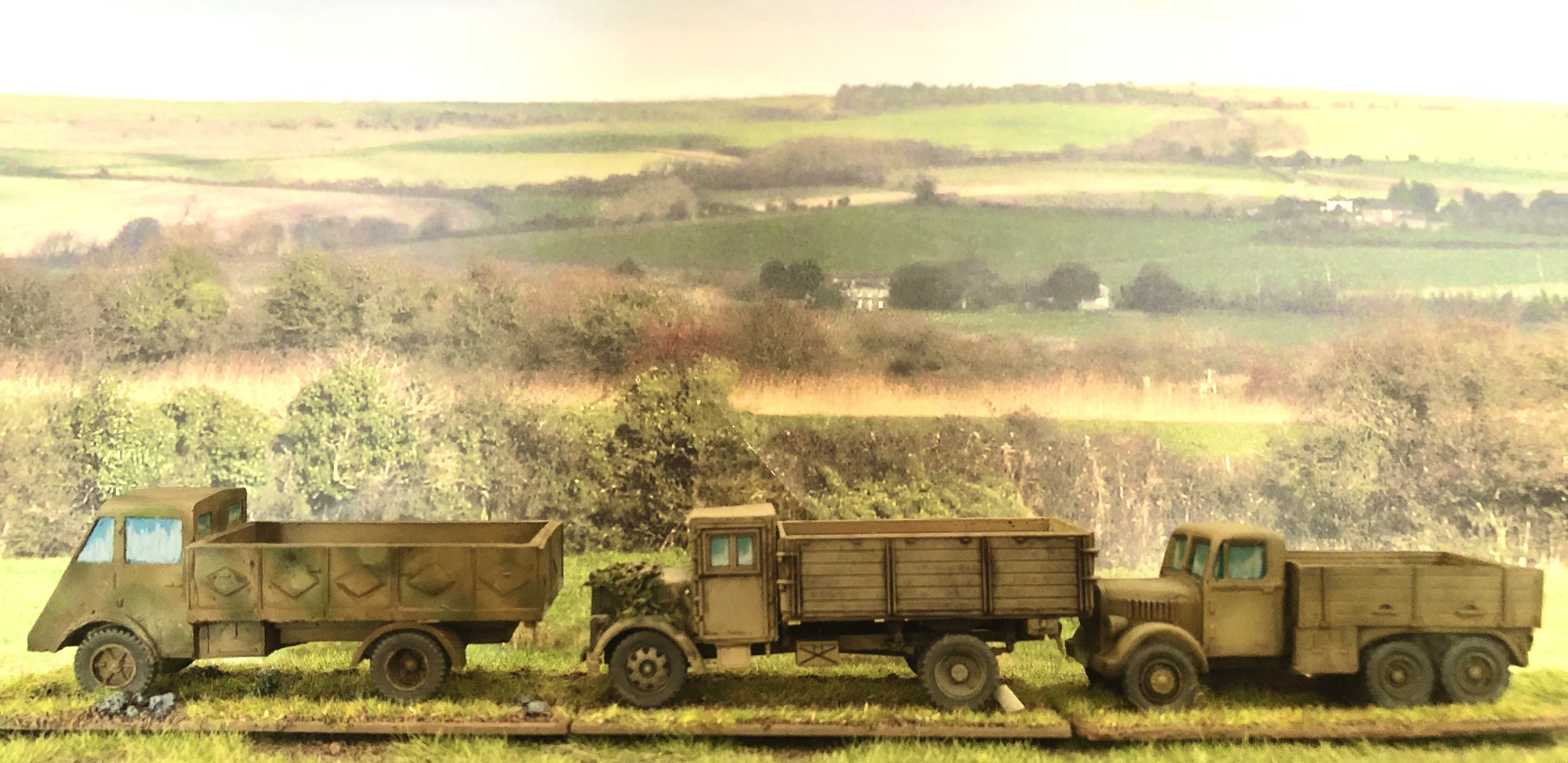
The Stab for Panzer-Brigade 107, its Stabskompanie, Aufklärungszug and Nachrichtenzug are formed from remnants of the 25. Panzergrenadier-Division. They are supposed to receive 18x Kettenkraftrad (Sd.Kfz. 2), 12x leichte Pkw, gl. (4-sitzig), 1x mittlerer Pkw, gl., 1x Lkw 2t, offen, gl., 3x Lkw 3t, offen, 7x Lkw 3t, offen, gl., 1x Lkw 3t, geschlossen, gl., 1x Zgkw 8t (Sd.Kfz. 7), 3x Sd.Kfz. 251/1, 6x Sd.Kfz. 251/3, 4x Sd.Kfz. 251/5 and 3x Sd.Kfz. 251/11. However, the Brigade-Stabskompanie received commercial cars instead of Kettenkräder.
Panzer-Abteilung 2107 is created from remnants of 25.Panzergrenadier-Division and replacement troops from Wehrkreis V. Commander of the Panzer-Abteilung is Major Hans-Albrecht von Plüskow The Abteilung is organized with:
Stab with 3x Kettenkraftrad (Sd.Kfz. 2), 2x leichte Pkw, gl. (4-sitzig), 2x mittlere Pkw, gl., 2x Sd.Kfz. 251/8, 4x Flakpanzerkampfwagen IV (3,7cm Flak 43)(Sd.Kfz. 161/3) and 3x Panzerbefehlswagen "Panther" (Sd.Kfz. 267)
1., 2., and 3.Panzer-Kompanie, each with 2x Kettenkraftrad (Sd.Kfz. 2), 2x leichte Pkw, gl. (4-sitzig) and 11x "Panther" Ausf. G (Sd.Kfz. 171)
4. (Panzerjäger-)Kompanie with 2x Kettenkraftrad (Sd.Kfz. 2), 2x leichte Pkw, gl. (4-sitzig) and 11x Panzerjäger IV L/70 (Sd.Kfz. 162/1)
The Versorgungskompanie is to receive 2x le Krad. 350ccm, 10x leichte Pkw, gl., (4-sitzig), 1x Lkw 2t, offen, 4x Lkw 2t, offen, gl., 2x Lkw 2t, geschlossen, gl. (of which 1 is an ambulance), 16x Lkw 3t, offen, gl., 39x Lkw 4,5t, offen, gl., 3x Werkstattkraftwagen, 1x Lkw 4,5t, gl., als Drehkrankraftwagen (Kfz. 100), 1x Gleisketten-Lkw 2t, offen, (Sd.Kfz. 3), 9x Zgkw 1t (Sd.Kfz. 10) and 1x Anhänger
Panzergrenadier-Batallion 2107 is created with five Kompanien (Sd.Kfz.251) from remnants of 25.Panzergrenadier-Division and Hauptmann Kurt Wild (06.04.1914 - 23.09.1944) is given as its commander.
Stab with 4x Kettenkraftrad (Sd.Kfz. 2), 2x leichte Pkw, gl., (4-sitzig), 4x Sd.Kfz. 251/3, 2x Sd.Kfz. 251/8 and 2x Sd.Kfz. 251/11
1. and 2.Kompanie with 5x Kettenkraftrad (Sd.Kfz. 2), 2x leichte Pkw, gl., (4-sitzig), 9x Sd.Kfz. 251/1, 2x Sd.Kfz. 251/2, 2x Sd.Kfz. 251/3, 2x Sd.Kfz. 251/9 and 6x Sd.Kfz. 251/21
3. Kompanie with 5x Kettenkraftrad (Sd.Kfz. 2), 2x leichte Pkw, gl., (4-sitzig), 8x Sd.Kfz. 251/1, 2x Sd.Kfz. 251/3 and 12x Sd.Kfz. 251/21
4. Kompanie with 6x Kettenkraftrad (Sd.Kfz. 2), 2x leichte Pkw, gl., (4-sitzig), 2x Sd.Kfz. 251/3 and 18x Sd.Kfz. 251/21
5. (schw.) Kompanie with 7x Kettenkraftrad (Sd.Kfz. 2), 2x leichte Pkw, gl., (4-sitzig), 2x Lkw 3t, offen, gl., 15x Sd.Kfz. 251/1, 2x Sd.Kfz. 251/3, 6x Sd.Kfz. 251/9 and 1x Sd.Kfz. 251/11.
Versorgungskompanie with 3x Kettenkraftrad (SdKfz 2), 5x leichte Pkw, gl., (4-sitzig), 6x Lkw 2t, offen, gl., 1x Lkw 2t, geschlossen (Krankenkraftwagen), 5x Lkw 3t, offen, 33x Lkw 3t, offen, gl., 1x Lkw 3t, geschlossen, gl., 3x Werkstattkraftwagen, 5x Gleisketten-Lkw 2t, offen, 7x Zgkw 8t (SdKfz 7) and 3x Anhänger.
Creation of Panzer-Pionier-Kompanie 2107 from 3./25. Panzer-Pionier-Batallion is also ordered, with 3x le Krad. 350ccm, 4x Krad. mit Seitenwagen, 3x Kettenkraftrad (SdKfz 2), 2x leichte Pkw, gl., (4-sitzig), 1x mittlerer Pkw, gl., 1x Lkw 2t, offen, gl., 2x Lkw 3t, offen, 8x Lkw 3t, offen, gl., 1x mittlerer Zgkw 8t (SdKfz 7) 2x SdKfz 251/1, 1x SdKfz 251/3, 14x SdKfz 251/7 and 6x SdKfz 251/16.
A leichte Panzer-Kompanie is to be formed with men from PaK-Ersatz-und-Ausbildungs-Bataillon 33
The Panzer-Werkstatt-Kompanie is to be formed with men from 25. Panzergrenadier-Division with 2x le Krad. 350ccm, 3x Krad. mit Seitenwagen, 2x leichter Pkw, 4x leichter Pkw, gl., (4-sitzig), 1x Lkw 2t, offen, gl., 1x Lkw 2t, geschlossen, 3x Lkw 3t, offen, 4x Lkw 3t, offen, gl., 11x Lkw 4,5t, offen 3x Werkstattkraftwagen, 1x Lkw 4,5t, offen, gl. (Kfz. 100), 3x SdKfz 9, 1x SdKfz 9/1, 3x Bergepanther (SdKfz 179) and 6x Anhänger.
But the maintenance units of the Panzer-Abteilung and the Panzergrenadier-Batallion were never actually formed. This has very serious consequences, because all vehicles needing repair now have to be send to the Tank Maintenance Detachment, which was normally far behind the front.
In total, the Brigade is given six weeks for formation and training, including a week for vehicle familiarization. This wasn't much time, but much more than was afforded the other Brigades raised during the same period.
During the following weeks the equipment for the Panzer-Brigade arrives at the Truppenübungsplatz in Mielau:
- 20x m.SPW (Sd.Kfz. 251) are assigned on 14.08.1944 (transported to Mielau on 19.08.1944)
- 21x m.SPW on 20.08.1944 (15.08 and 26.08.1944)
- 11x Pz.Kpfw. V (Panther) and 2x Bergepanther on 21.08.1944 (24.08.1944)
- 8x Pz.Kpfw. V on 23.08.1944 (27.08.1944)
- 32x m.SPW on 23.08.1944 (30.08.1944)
- 16x m.SPW on 24.08.1944 (30.08.1944)
- 17x Pz.Kpfw.V on 25.08.1944 (28.08.1944)
- 42x m.SPW on 26.08.1944 (30.08.1944)
- 22x m.SPW on 27.08.1944 ( 01.09.1944)
- 4x m.SPW on 29.08.1944 (01.09.1944)
- 11x Pz.Kpfw.IV/70(V)) on 30.08.1944 (08.09.1944)
On 30.08.1944 creation starts of a Panzer-FlaK-Zug for Panzer-Abteilung 2107, 4x Flakpanzerkampfwagen IV (3,7cm Flak 43)(Sd.Kfz. 161/3) from 3./Panzer-Esatz-und-Ausbildungs-Abteilung 204 and personnel from Wehrkreis XII, as well as a Panzer-FlaK-Zug with Sd.Kfz.251/21 "Drilling" for the Brigade-Stab, also from men from Wehrkreis XII.
Into action
On 11.09.1944 Panzer-Brigade 107 and 108 are assigned to OB West and was entrained and transported to the West. It was supposed to be deployed in the planned counterattack of 5. Panzerarmee near Epinal (Belgium). The Brigade was originally intended for use in the Aachen area, to counter those Allied forces that had crossed the German border, but on 16.09.1944 Generalfeldmarschall Model promises Panzer-Brigade 107 to AOK 7 to be deployed together with 116. Panzer-Division. In the morning of 17.09.1944, AOK 7 informs the LXXXI. Armeekorps that the Brigade will arrive in Düren (Germany) the following morning, but in the afternoon AOK 7 informs them that the Brigade will not be placed under their command, due to the allied landings in the Arnhem-Nijmegen area.
It takes seventeen trains to move the Brigade to its deployment area. The first elements (one Panzer-Kompanie, one Panzergrenadier-Kompanie and the Panzer-Pionier-Kompanie) of the Brigade are unloaded at the railroad station of Venlo in the evening of 18.09.1944. Much to Von Maltzahn's surprise there is nobody at the station. The Dutch workers are on strike, but there is also nobody to give him further instructions. He immediately tries to call the headquarters of General Student and after several attempts he manages to get trough. They tell him that his Brigade is assigned to General Von Obstfelder's LXXXI.Armeekorps, but for further orders he will have to contact Von Obstfelder in Roermond. Von Maltzahn drives to Von Obstfelder's headquarters, were he learns about the latest developments at the front. They assure him that the Brigade will see action before it is fully assembled. But back in Venlo Von Maltzahn receives orders by telephone from LXXXI.Armeekorps headquarters that the Brigade must move out immediately to put the right flank of the British 2nd Army under pressure by taking and holding the destroyed bridge over the Wilhelmina Canal at Son. The other elements of Panzer-Brigade 107 are still en-route by train, and are not to arrive until 19.09.1944. Von Maltzahn is furious. As an experienced Panzer commander he is very well aware that his force is severely weakened. He immediately calls them back to get this order cancelled. At first headquarters insists that he must act at once. British troops are about to make contact with the Americans in Eindhoven. After long debating the Major is allowed to continue unloading his equipment, but later that evening there's another phone call. This time it was Student himself. He ordered Von Maltzahn to attack toward Eindhoven at first light the following morning.
The following day, 19.09.1944, Panzer-Brigade 107 moves out to secure the bridge erected by Allied engineers at Son. After taking the bridge they are to move towards Sint Oedenrode to prevent the XXX.Corps from reaching Nijmegen. Unfortunately the 59. Infantrie-Division is unable to support the Brigade because its units were decimated during the fighting on 17.09 and 19.09.1944. Major Freiherr von Maltzahn decides to attack with the forces available to him. The roads in the Son area do not allow Von Maltzahn to attack with the bulk of his force. Instead the attack is a reconnaissance in force. The advance party of the Brigade crosses the Maas River and the South Wilhelmina Canal and advances on Helmond. The weather is favorable for the Germans because heavy clouds enable the Kampfgruppe to move toward Son without being spotted by JaBos. In Helmond the Brigade is reinforced by the I.Batallion of Fallschirmjäger-Regiment 21, led by Hauptmann Vosshage, who's men climb on the back of the Panthers. At noon they move on.
In the afternoon the lead tanks, led by Leutnant Graf Von Brockdorff-Ahlefeld, open fire as they attack toward the bridge at Son. Fire from an advancing Panther tank sends Major General Maxwell Taylor, commander of the U.S. 101st Airborne Division, scrambling into the street. However, the American paratroopers manage to halt the attack. Von Brockdorff-Ahlefeld's tanks are unable to cross the Wilhelmina Canal. Their route forces them to parallel the canal and expose their flanks. The Brigade manages to destroy several British trucks of the British XXX Corps, including one on the bridge itself, but a 57mm AT- gun knocks out a Panther. As darkness falls, the Brigade is unable to force a crossing and after losing 2 more tanks to allied AT-fire they pull back to Nuenen.
Von Maltzahn prepares his next move during the night. The next morning, 20.09.1944. At first light his infantry attempts to take the bridge by surprise, but the American line between Son and Esp halts their advance. An hour later the Panzer-Brigade attacks again. Success seems within range of the Brigade, but British Cromwells from the 15th Hussars arrive just in time to blast the attack to a halt. Von Maltzahn once again has to withdraw his unit, leaving four more destroyed or disabled Panthers. He pulls back on Nuenen, 3 kilometers to the southeast of the bridge. Tanks from 44th Royal Tanks move in to clear the area between the Dommel River and the main road. By noon the traffic on "Hell's Highway" is moving again. The Allied forces counter attack toward Nederwetten and Nuenen with tanks from 44th Royal Tank and the Hussars, supported by American paratroopers, but after fierce fighting the Panzer-Brigade throws them back. Both sides suffer considerable losses, but the Allies have to pull back to Eindhoven. The LXXXVI.Armee Korps reports that evening that the attack of Panzer-Brigade 107 is stopped along the line Nederwetten-Nunen with several losses. Von Maltzahn decides to pull out of the Son area, despite the fact that the last elements of his Brigade, which had detrained in Venlo, finally arrived. But to the south of his positions the British VIII.Corps brakes out of its bridgehead near Achel and two advancing forces from 11th Armoured force him to concentrate on the defense of Nuenen. But a shouting party from 11th Armoured manages to contact the paratroopers of 506th Parachute Infantry Regiment south of Geldrop. Due to this new treat, Von Maltzahn has to pull back from Nuenen, because his only escape route trough Helmond, just nine kilometres from Geldrop. This retreat means the end of the German pressure on the Allied Corridor near Eindhoven.
In the early hours of 21.09.1944 the British VIII.Corps pushed forward again, in a new attempt to reach the decimated British paratroopers in the Arnhem area. The Panzer-Brigade sees fierce combat as they are attacked while they are in the progress of falling back on Helmond over Gerwen and Stiphout. Its rear guard fences off the 23rd Hussars and the 8th Rifle Brigade. In the evening, the Von Maltzahn receives orders to move to Gemert, eighteen kilometers north eastwards of Nuenen, to participate in the attack there. The Brigade is assigned to Kampfgruppe Walther, a group of units (one Waffen-SS Bataillon, one Heeresersatzbataillon, one Artillerie-Batallion, and a Heeres FlaK-Batallion) led by Oberst Walther, a Luftwaffe officer. His mission is to break through the XXX.Corps corridor between Eindhoven and Nijmegen at Veghel, after linking up with the remains of the 59. Infantrie-Division advancing from the West. The attack takes place shortly before noon on the 22.09.1944 under hazy weather conditions. Kampfgruppe Walther, with the Panthers of Panzer-Brigade 107 supported by Infantry in front, advances toward Erp, four kilometers southeast of Veghel, were elements of the 501st Parachute Infantry Regiment prepare their defense. A little later the Panthers move as far as the road between Veghel and Uden and then turn south. For the first time since the start of Operation Market Garden the Brigade managed to cut off the Allied Corridor. Hurriedly brought-up parachute and glider battalions of the US 101st Airborne Division, equipped with several anti-tank guns, manage to stop the attack at the outskirts of Veghel. Fallschirmjäger of Kampfgruppe Walther launches another attack which is also halted by the Allied forces at Veghel, which has grown to eight infantry battalions, artillery, and two companies of British tanks. In the afternoon Panzer-Brigade 107 makes its last attempt to break the Americans, but the Panthers are halted by Shermans from the 44th Royal Tank. Major von Plüskow, the commander of Panzer-Abteilung 2107, is killed in action during the night. Kampfgruppe Walther brakes off the attack shortly before noon on 23.09.1944, and begins to pull back. With the ensuing counterattack General Taylor hopes to crush the Kampfgruppe but communication between the American and British allies is laborious, yet it forces the Germans into a defensive line. Hauptmann Wild is killed organizing the defense. The following morning Von Maltzahn retreats to Gemert, some 6 kilometers to the southeast of Veghel. The Brigade suffered severe losses during the past week of fighting and is no longer strong enough to be used against the advancing British forces.
On 25.09.44, Panzer-Brigade 107, as part of Kampfgruppe Walther, marches northeast in the direction of Overloon. During this march, Von Maltzahn receives new orders. The Brigade is now to move to Oploo, where it is to await the upcoming Allied attack in a defensive line that runs along the line Venray - Overloon - Oploo to the Maas River near Boxmeer. Apart from Panzer-Brigade 107 the line was defended by three Fallschirmjägerbataillone, one Heeresersatzbataillon and one Waffen-SS Bataillon. On 27.09.1944 increasing allied pressure on Overloon in reported.
Over the last month of fighting, the Brigade suffered 323 casualties. On 30.09.1944, it has a strength of 1975 men (including 187 wounded), 7x Pz-IV (both Flak-Panzer and Pz-IV/70), 19x Pz-V Panther and 133x SPW. That day the US 7th Armored Division attackes with overwhelming strength. Oploo is abandoned after heavy fighting and the Brigade retreats to Overloon. An Allied breakthrough on 01.10.1944 is thrown back by Panzergrenadier-Batallion 2107 but they suffer considerable losses and are withdrawn behind the lines. They receive replacements towards the end of the month. The rest of the Brigade continues to fight in the Venlo area. On 02.10.1944 Panzergrenadier-Battalion 2107 is at Merselo and Panzer-Abteilung 2107 is in the Venray - Overloon area.
During October the Brigade suffers 182 casualties. On 31.10.1944 it has a strength of 1977 men, 8x Pz-IV, 11x Pz-V Panthers and 134x SPW. On 04.11.1944 It is finally with-drawn. It is gathered under Major Volker, who had replaces Major von Maltzahn as commanding officer. After a road march to Kaldenkirchen the Brigade is entrained and transported to Truppenübungsplatz Baumholder on 08.11.1944. The next day Panzer-Brigade 107 is dissolved. Its units are assigned to the newly formed 25. Panzergrenadier-Division.
Sources
Kampfgruppe Walther and Panzer Brigade 107, a thorn in the side of Market Garden. J.Didden & M. Swarts
Opération Market Garden, l’autre côté de la colline, les réactions allemandes du 17 au 25 septembre 1944, Hell’s Highway (1ère partie), in 39/45 Magazine n°363 (Heimdal, 2020) S. Jacquet.Operation Market Garden, Then and Now